Light is one of the most important factors in achieving a healthy, uniform and productive crop. Whether in a greenhouse, a vertical farming facility or an indoor growing space, choosing the right light can make the difference between simply growing plants and producing a crop of the highest quality.
In recent years, many questions have arisen about white, red, blue and green light. Is white light essential for a better crop? Does it produce stronger plants? Or is a spectrum specifically designed for each species sufficient?
At Neocultum, we examine scientific research and practical experience to understand how each type of light influences crop development.
What do we mean by white light?
White light is a spectrum combining different wavelengths visible to the human eye. Unlike light consisting only of red and blue wavelengths, white light incorporates a greater proportion of green light, together with other wavelengths that make it appear similar to natural lighting.
For people, white light creates a much more pleasant visual environment and makes it easier to inspect crops, detect potential diseases, assess leaf colour and check fruit development.
However, better visual perception does not necessarily mean a higher crop yield.
Light and photosynthesis
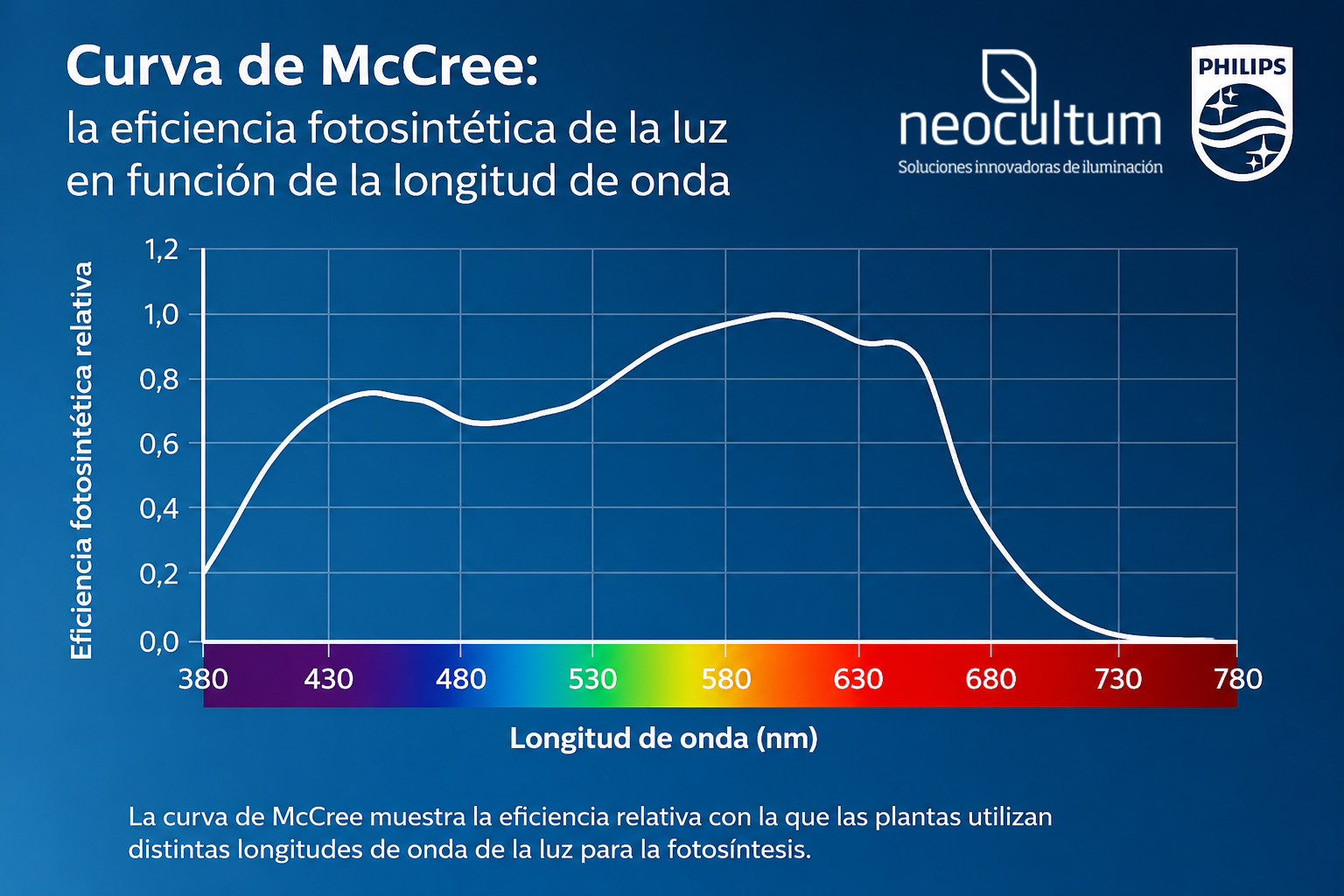
All light useful for photosynthesis can contribute to plant growth. However, not all wavelengths are used with equal efficiency.
Red light generally has high photosynthetic efficiency, while blue light is strongly involved in processes related to morphology, leaf development, stomatal opening and crop architecture. Plants can also use green light. Although it was long considered of little use, we now know that some of it penetrates the canopy and contributes to photosynthesis.
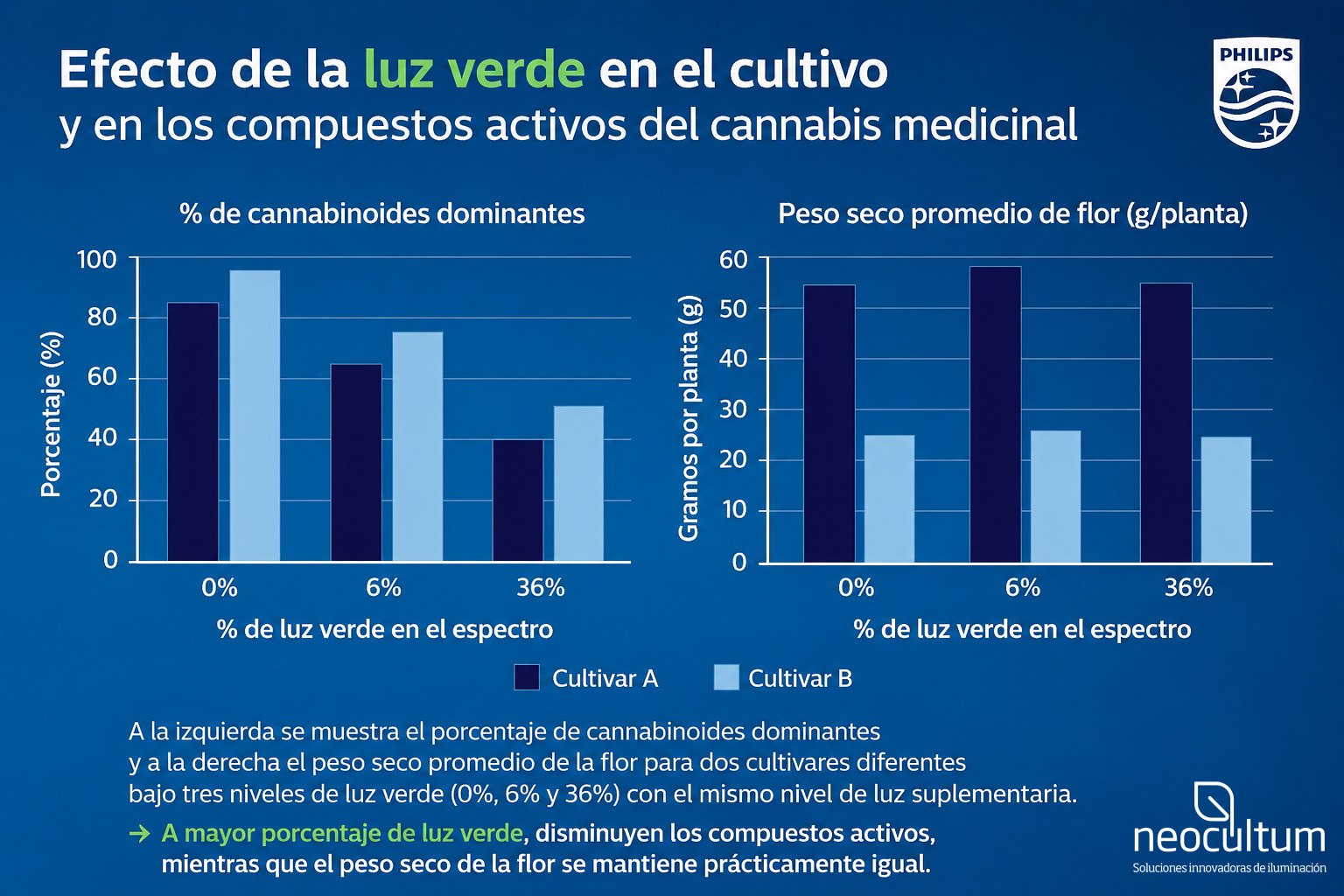
The important question is not whether green light works, but how much it actually contributes to crop yield compared with other light sources.
Does white light really improve crops?
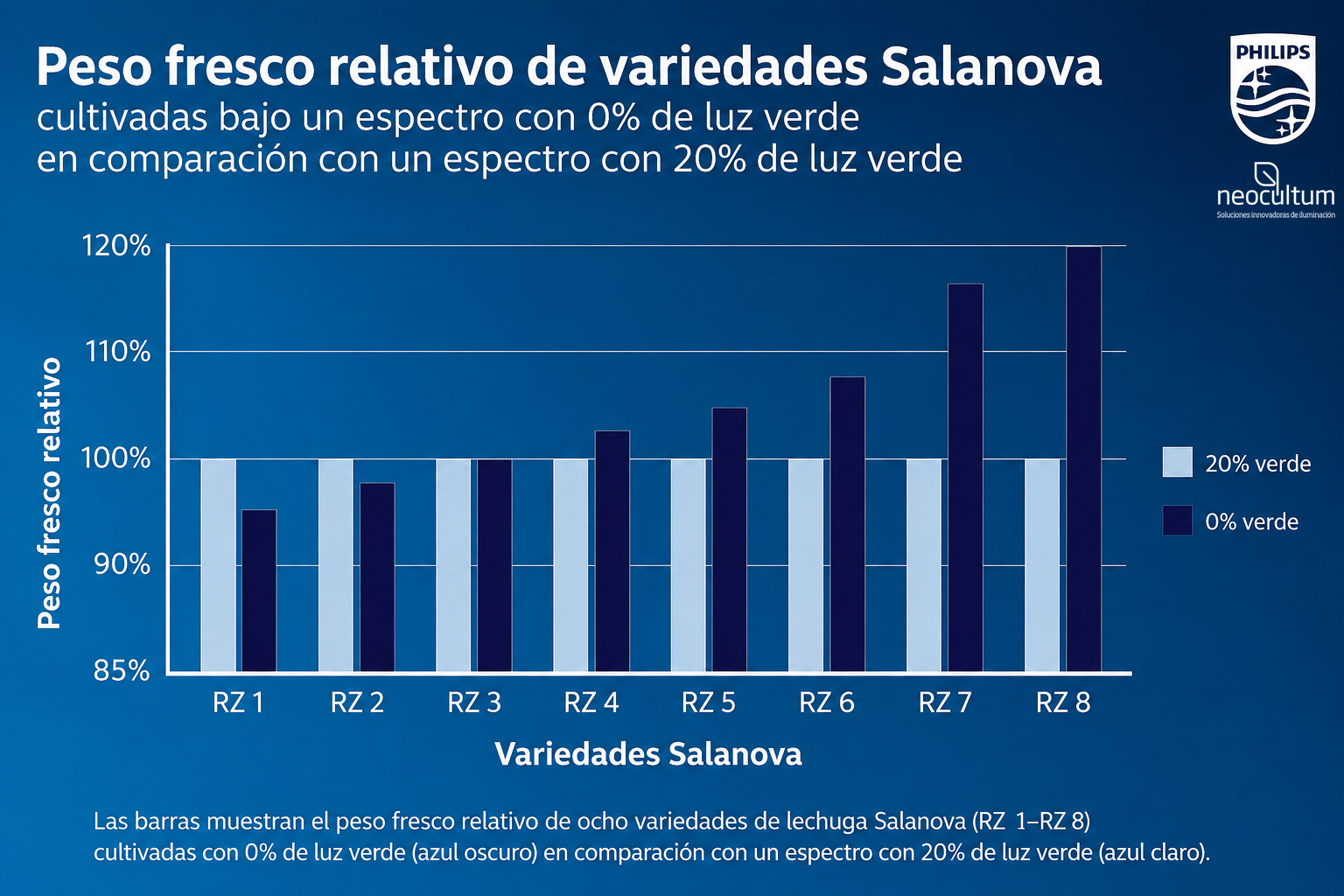
One widespread belief is that white light produces larger plants or higher yields. However, numerous trials involving different species show that this is not always the case.
When different spectra are compared at the same total light quantity, many experiments show very small differences in production. In some cases, the crop barely changes. In others, certain varieties even achieve higher yields under an optimised combination of red and blue light with limited green light.
This means white light does not automatically guarantee a better crop. Each species responds differently, and every growing strategy must be adapted to the plant’s physiological needs.