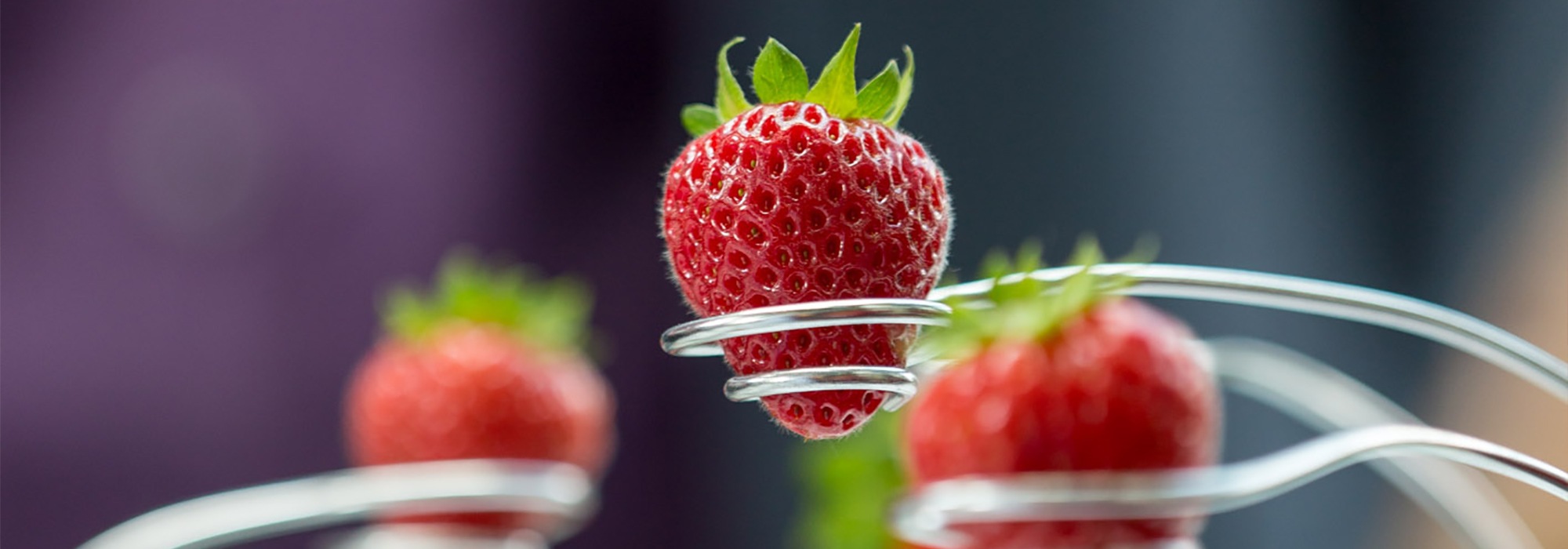
Is it possible to grow sweet strawberries all year without relying on sunlight? Vertical farming and LED grow lighting are demonstrating new possibilities for producing high-quality fruit in fully controlled environments.
In a vertical farm, productivity is only part of the objective. Competitive strawberry production also requires attractive, uniform fruit with good flavour. This is where horticultural LED lighting has particular potential. Light quantity directly influences development, but lighting strategy need not be limited to a particular intensity. Spectrum, photoperiod and distribution can also adapt growing conditions.
Controlled-environment trials have shown that particular light recipes can influence strawberry quality characteristics, including sugar content.
Why grow strawberries in a vertical farm?
Strawberries are particularly interesting for indoor agriculture because production can benefit from a controlled environment. Growers can manage temperature, humidity, irrigation, nutrition, photoperiod and lighting, reducing dependence on weather and creating a more stable environment.
Vertical production also uses space across several growing levels. Instead of relying solely on a horizontal surface, plants can be arranged in multiple layers with LED lighting designed for each area. Suitable lighting can improve crop consistency and make production more predictable.
At Neocultum, we work with horticultural LED lighting to improve fruit and vegetable quality, consistency and yield through crop-specific light recipes.
The goal is not simply more strawberries
Vertical farm viability is often assessed through yield per square metre, growth rate and energy consumption. For strawberries, however, another factor is fundamental: flavour.
A strawberry may look good and have an appropriate size, but without an appealing sensory experience it is harder to differentiate in the market. Indoor strawberry research should therefore examine not only how much a plant produces, but also the resulting fruit quality.
How is strawberry sweetness measured?
Degrees Brix are one measure used to assess fruit soluble solids content.
Brix values indicate the concentration of soluble solids, including sugars. In strawberries, this can provide useful information when comparing production strategies. Measuring Brix in lighting trials helps establish whether a particular light strategy is associated with changes in fruit characteristics.
Brix is not the only indicator of flavour, which depends on many compounds and factors. It is nevertheless a useful variable for comparing growing conditions.
A light recipe can change fruit quality
Modern horticultural lighting can be used as a crop-control tool. Rather than maintaining identical light conditions throughout the cycle, an LED installation can use different light recipes according to plant development stage.
This makes it possible to design lighting for both growth and particular production characteristics. In controlled-environment strawberry trials, one recipe achieved Brix values approximately 20% higher on average than other tested lighting strategies. This is especially interesting because it shows that lighting can affect more than the quantity of biomass produced.
The original trial is described in this technical article on strawberries grown in vertical farms.
More crop control means more possibilities
In conventional agriculture, light quantity and quality largely depend on the season, location and weather.
Vertical farming changes this. In an enclosed environment, growers determine when plants receive light, for how long and with which spectral characteristics, creating more reproducible conditions.
For strawberries, this control is particularly useful for investigating the relationship between lighting, plant development, production and fruit quality.
Summer strawberries in winter: a major opportunity
One appealing idea in vertical farming is producing food outside its traditional season.
Strawberries are associated with months of abundant natural light and favourable temperatures. A vertical farm, however, does not directly depend on outdoor conditions. LED lighting, climate management and environmental control can create conditions for production regardless of the season.
This opens an interesting possibility: fresh, locally grown strawberries even in winter. Production close to consumers can also shorten transport distances, especially relevant to perishable fruit.
What benefits does LED lighting offer strawberries?
LED lighting controls variables fundamental to vertical farming:
- Photoperiod control: defining the hours of light received.
- Intensity control: adapting light quantity to development stages.
- Spectrum control: using different wavelength combinations.
- Uniformity: providing even lighting to plants.
- Energy efficiency: designing installations optimised for energy use.
- Flexibility: certain luminaires adapt lighting to varieties and growing strategies.
These characteristics make LEDs particularly useful for controlled-environment plant production.
The importance of choosing the right light recipe
No single light recipe is perfect for every crop.
Strawberry needs differ from lettuce, basil, tomatoes and other species. Even varieties within one species may respond differently.
A professional strategy must therefore consider plant type, variety, production system, crop density, development stage and commercial objective.
Vertical farms allow these variables to be studied under controlled conditions and used to develop more precise strategies.
Vertical cultivation with LED lighting provides this control, adapting light to fruit, vegetables, herbs and other crops.
From producing strawberries to producing better strawberries
Vertical farming is changing the question growers ask. It is no longer simply how much an installation can produce, but also which characteristics the final product can have.
Lighting technology that modifies the growing environment opens opportunities to work on yield, uniformity, colour, composition, development and quality.
Sweetness is particularly important for strawberries. Investigating interactions between spectrum, intensity, photoperiod and environmental variables can help develop more sophisticated production systems.
Can vertical farming produce strawberries all year?
Year-round strawberries are an interesting example of what vertical farming, LED lighting and environmental control can achieve together.
The challenge is economic viability without losing quality or using unreasonable amounts of energy. Mature plants, suitable varieties, precise nutrition and optimised light recipes can improve this balance.
Research continues to advance. Every improvement in lighting efficiency or knowledge of plant responses can bring this model closer to increasingly competitive commercial production.
The future of LED-grown strawberries
Strawberries illustrate how vertical farming can evolve from a model focused solely on productivity to one where food quality is central.
Adjustable light enables research into fruit with specific characteristics and consistent conditions throughout the year. The aim is not to replace nature entirely, but to use technology to give each crop the conditions it needs at each moment.
In this context, light recipes have enormous potential for controlled-environment agriculture.