How can LED lighting help grow better-tasting tomatoes?

Category: Horticulture

Flavour has become one of the main quality criteria in tomato production. Consumers want sweeter, more aromatic and more consistent fruit, a demand that also influences the decisions of distributors, supermarkets and growers.

The chosen variety remains a decisive factor, but it is not the only one involved. Light spectrum, light intensity, temperature, humidity and the balance between vegetative and generative growth can significantly change the fruit’s final characteristics.

In this context, LED lighting for growing tomatoes provides better control over the quantity and type of light plants receive. Various greenhouse trials have examined whether tomatoes grown under LEDs can achieve a flavour comparable to those grown under HPS lighting, and whether specific light recipes can improve it.

Can LED lighting improve the flavour of tomatoes?

Answering this question requires separating two aspects. First, it is necessary to establish whether switching from HPS to LED preserves the tomato’s sensory quality. Second, it is important to examine whether changing the light spectrum can positively influence parameters such as sugars, acidity, juiciness, texture and aroma.

The available studies indicate that a correctly configured LED solution can produce tomatoes with a flavour similar to crops lit by HPS. The key is not simply to install more efficient luminaires, but to combine a suitable light recipe with a climate strategy adapted to the crop.

At Neocultum, we work with LED lighting solutions for horticulture designed to improve the uniformity, efficiency and yield of greenhouse crops.

The importance of choosing the right light spectrum

Plants do not respond to all wavelengths in the same way. For this reason, the spectrum used in tomato cultivation can influence both plant architecture and fruit development and composition.

Blue light and far-red light are among the spectral regions attracting the most interest:

  • Blue light: can help control plant elongation and, in certain crops, has been linked to favourable changes in flavour and aroma.
  • Far-red light: can affect generative development and fruit formation, although excessive application can also increase stem length.
  • Combining blue and far-red light: makes it possible to seek a balance between the generative response, fruit quality and controlled plant structure.

This explains why a light recipe should not be chosen in isolation. Each change to the spectrum can generate positive effects, but also vegetative responses that must be balanced through climate, temperature and irrigation management.

Four light recipes tested in tomato cultivation

One of the reference trials compared four different lighting configurations:

  1. A control spectrum based on red, blue and light blue, optimised for tomatoes.
  2. The same control spectrum with additional far-red light.
  3. A spectrum with a higher proportion of blue light, replacing part of the red light.
  4. A configuration with more blue light and additional far-red light.

The aim was to determine whether any of these combinations produced noticeable differences in flavour, while observing how the plants responded in terms of vegetative and generative growth.

Two types of cherry tomato with similar physical characteristics but different genetics were selected for the trial. This made it possible to check whether different varieties responded comparably to changes in spectrum.
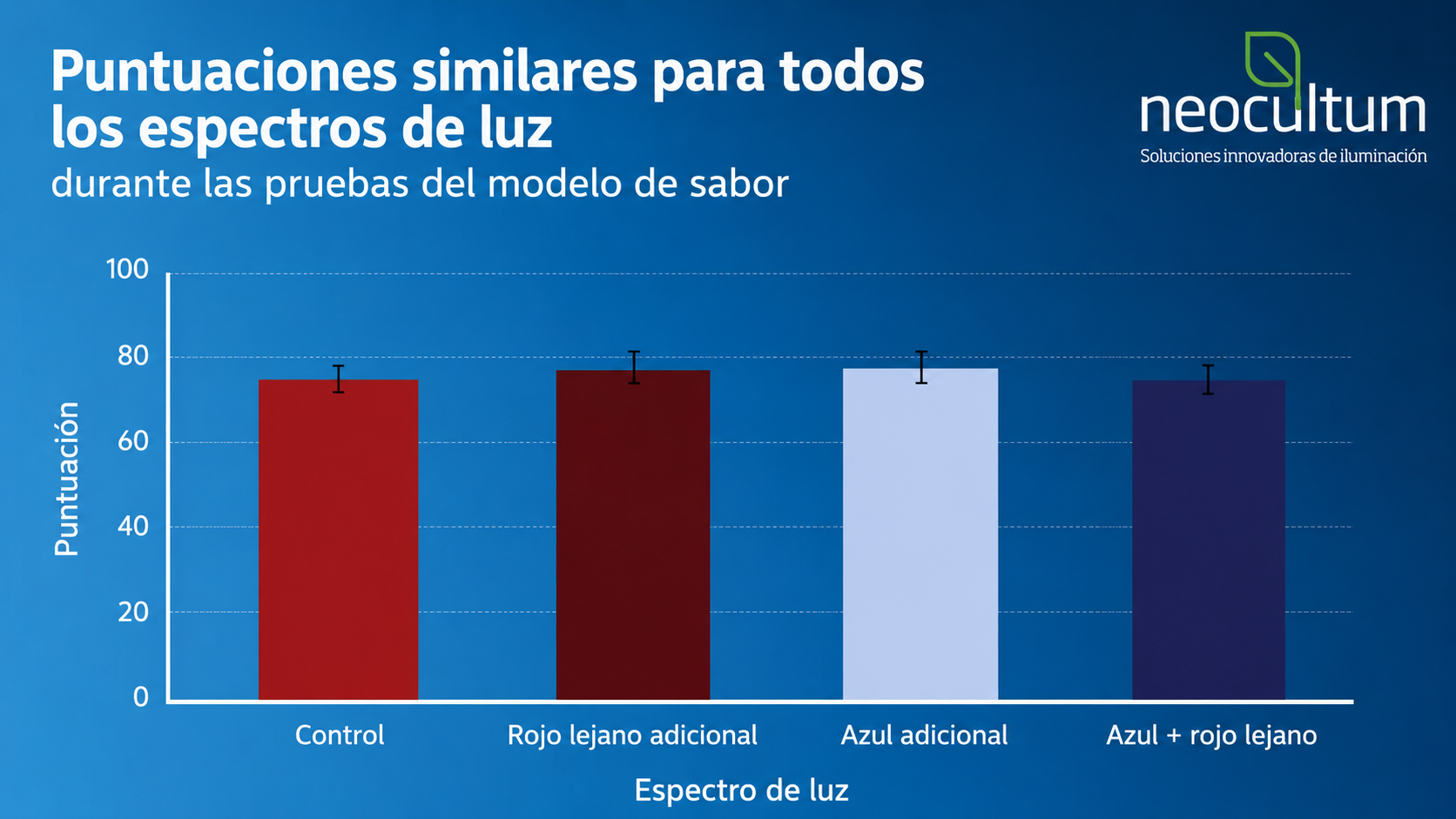
Comparison of flavour scores for tomatoes grown under four LED light spectra
The four lighting spectra achieved similar flavour scores. Source: Philips

Conditions of the LED lighting trial

The trial took place in a greenhouse at Wageningen University in the Netherlands, an institution internationally recognised for its agricultural and food research.

The crop received a total PAR light intensity of approximately 210 µmol/m²/s, divided between:

  • 135 µmol/m²/s of overhead LED lighting.
  • 75 µmol/m²/s of interlighting between the plants.

Supplementary far-red radiation was added through the interlighting. This combination distributed light not only over the top of the crop, but also within the canopy, where overhead radiation reaches the leaves at a lower intensity.

Interlighting for tomatoes can be particularly useful in trellised crops, as it brings the light source closer to leaves in the middle and lower parts of the plant.

How was tomato flavour assessed?

Flavour cannot be analysed using a single indicator. Two complementary assessment systems were therefore used during the trial.

Taste panels

The tomatoes were assessed by taste panels in several sessions. This method reveals how consumers or specialists actually perceive sweetness, acidity, aroma, texture and the overall impression of the product.

Instrumental flavour model

A model developed by Wageningen University was also applied to analyse objective parameters such as:

  • Sugar content.
  • Acid levels.
  • Firmness and bite.
  • Juiciness.
  • Fruit weight.

Combining instrumental measurements with sensory tests provides more consistent results. Panels assess the consumer experience, while sensors enable objective comparisons between treatments and harvest dates.

Further information on agricultural research and greenhouse production is available on the Wageningen University website.

Results of the different light recipes

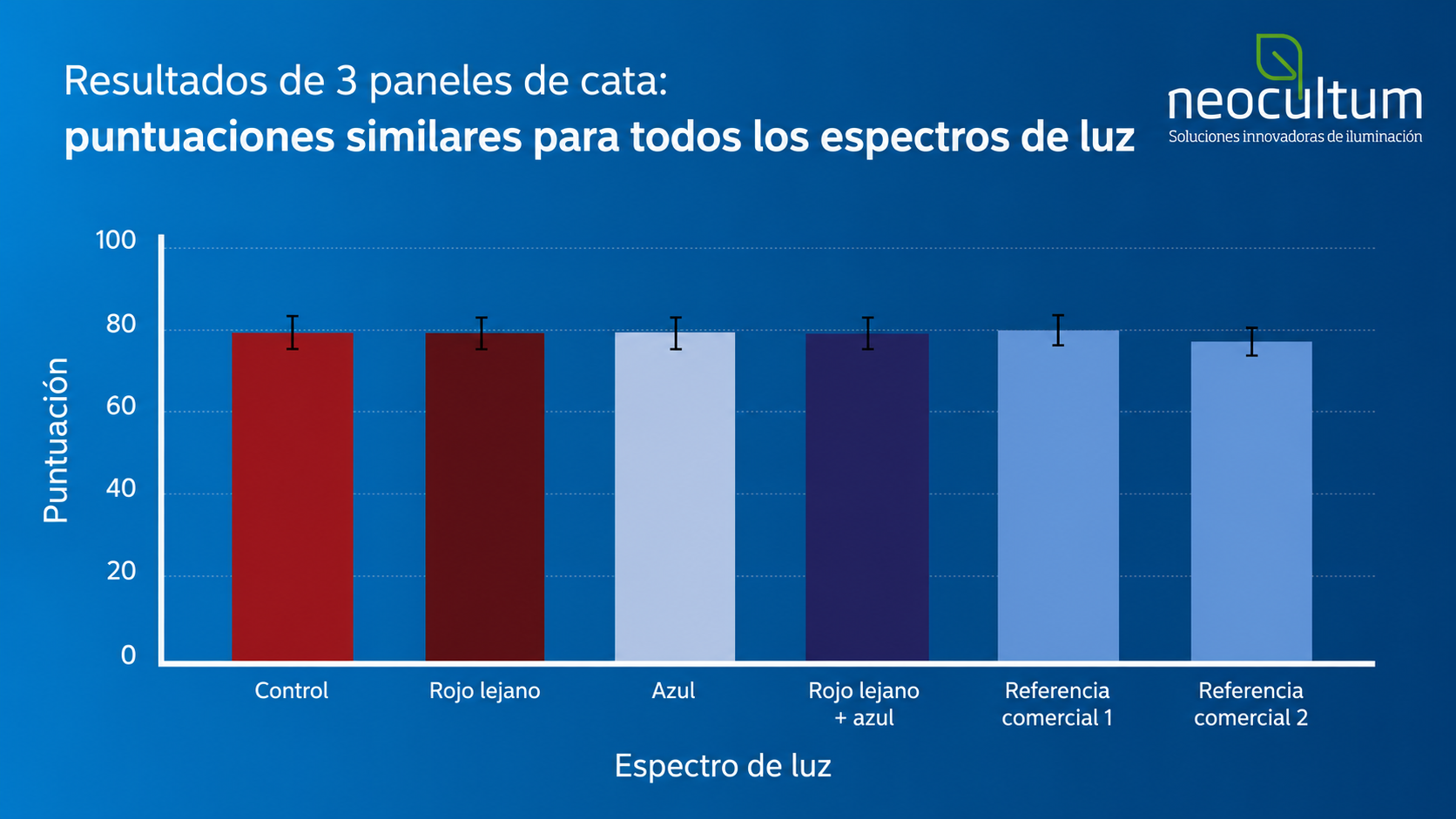
The different spectra achieved statistically comparable flavour scores. In other words, none of the experimental configurations produced a significant improvement over the control spectrum.

However, this result should not be interpreted negatively. All four treatments produced highly rated tomatoes, demonstrating that LED lighting can maintain very favourable quality and flavour under suitable growing conditions.

The sensory tests also confirmed that there were no major differences between tomatoes grown under the different spectra. This reinforces an important conclusion for growers: an optimised LED recipe can deliver consistent results without compromising sensory quality.

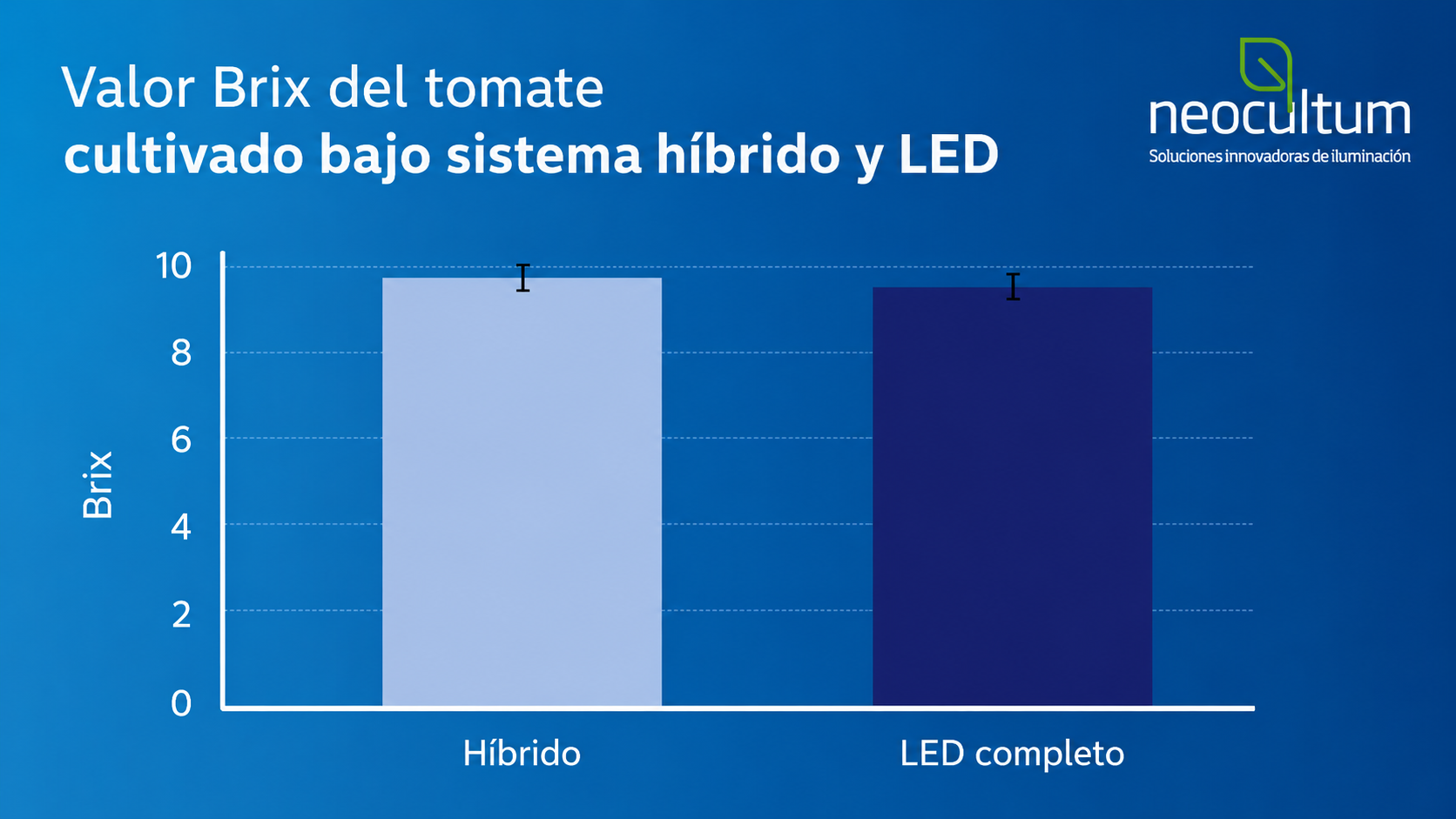
Comparison of Brix values for tomatoes grown under hybrid and all-LED lighting
The hybrid system and all-LED lighting produced tomatoes with similar Brix values. Source: Philips
Results of three taste panels for tomatoes grown under different light spectra
Taste tests showed no significant differences between the light spectra and the commercial references. Source: Philips

Comparison with commercially grown tomatoes

After the four light recipes had been assessed, the trial tomatoes were compared with several commercial reference tomatoes grown under HPS lighting.

The taste panels showed that tomatoes grown entirely under LEDs had a flavour comparable to the commercial tomatoes. Although one reference achieved a slightly higher average score, the differences were not statistically significant.

This finding is particularly relevant to growers considering a switch to LEDs. Improvements in energy efficiency and lighting control do not necessarily mean a loss of flavour, provided the crop is managed using an integrated strategy.

The greenhouse climate also influences the outcome

Light is one of the main drivers of plant growth, but it does not act alone. The final flavour of a tomato depends on the interaction between several factors:

  • Plant variety and genetics.
  • Daytime and night-time temperatures.
  • Relative humidity.
  • Irrigation and electrical conductivity.
  • CO₂ supply.
  • Fruit load.
  • Vegetative–generative balance.
  • Light intensity, duration and spectrum.

During a trial involving different varieties and spectra, the compartment climate must be adjusted so that all treatments can develop properly. As a result, some varieties may grow under conditions that favour vegetative growth more than would be ideal for maximising flavour.

The potential of an LED recipe may therefore be even greater when it is installed in a commercial greenhouse and the climate, irrigation and nutrition are adjusted specifically for that variety.

HPS versus LED lighting: are there differences in flavour?

Other trials have directly compared tomatoes grown under an entirely HPS installation with tomatoes produced using an all-LED solution.

One of the indicators used was degrees Brix, a measure related to the concentration of soluble solids and commonly used as an indicator of fruit sugar content.

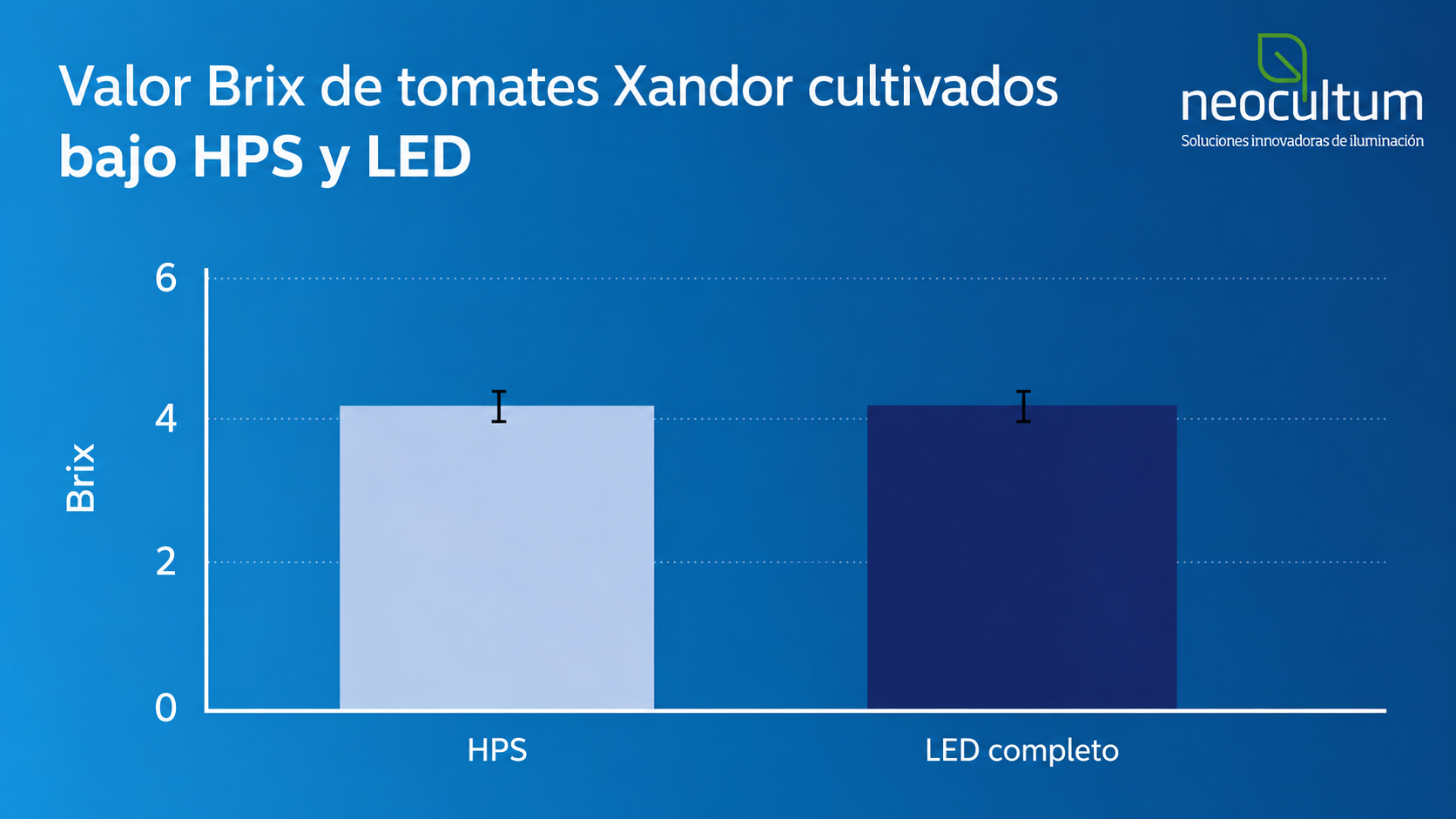
The results showed similar Brix values in both treatments. This indicates that tomatoes grown under LEDs could achieve a sugar concentration comparable to that obtained with HPS.

In addition, in one of the trials, the LED solution achieved approximately 5% higher yield than the HPS installation. Although yield depends on the variety, climate and configuration of each project, this result demonstrates the potential of LEDs to combine productivity and quality.

Comparison of Brix values for Xandor tomatoes grown under HPS and all-LED lighting
Tomatoes grown under HPS and all-LED lighting had virtually identical Brix values. Source: Philips

Hybrid systems and 100% LED solutions

The technological transition does not always have to happen in one step. Some growers choose hybrid systems combining HPS and LED luminaires, while others install an all-LED solution.

In a comparison between a hybrid system and a 100% LED system, cherry tomatoes were grown in the same compartment under equivalent climatic conditions. Once again, degrees Brix were similar.

This suggests that both hybrid and all-LED solutions can preserve product flavour. The choice depends on factors such as existing infrastructure, available electrical capacity, the greenhouse heating strategy, production targets and the investment budget.

For more details on the original trials and results, see the study on growing tomatoes with LED lighting published by Philips.

Benefits of using LED lighting in tomato cultivation

In addition to preserving flavour, a well-designed LED installation can provide other operational benefits:

  • Greater efficiency in converting electricity into light useful to plants.
  • Less radiant heat reaching the crop than with HPS luminaires.
  • The ability to apply high light levels with greater climate control.
  • More precise radiation distribution through overhead lighting and interlighting.
  • Intensity adjustment according to available natural light.
  • Light recipes adapted to varieties and growth stages.
  • More predictable production during months with less solar radiation.

However, switching from HPS to LED requires a review of the growing strategy. Reduced radiant heat can change leaf temperature, transpiration, humidity and heating requirements. The installation should therefore be approached as an agronomic and energy project, rather than simply replacing luminaires.

The trials lead to a clear conclusion: tomatoes grown under LED lighting can achieve a flavour comparable to those produced under HPS systems.

Different combinations of blue, red and far-red light do not always produce significant differences on their own. The best results come when the spectrum, light intensity and photoperiod are coordinated with the greenhouse climate, variety, nutrition and the plant’s generative balance.

LED lighting gives growers a tool to increase control over their crops, optimise energy consumption and maintain the quality the market demands.

Neocultum LED solutions for horticulture

At Neocultum, we analyse the characteristics of each growing operation to propose lighting solutions adapted to the crop, existing installation and production targets.

A professional assessment should consider light distribution, PAR intensity, operating hours, the technology currently installed, greenhouse climate and expected return on investment.

Contact Neocultum to explore an LED lighting solution adapted to your tomato production and the specific conditions of your greenhouse.