Lighting is one of the factors with the greatest impact on crop development. In greenhouses, vertical farms and technologically advanced agricultural operations, choosing the right light spectrum can make the difference between efficient production and lower yields.
However, many myths about LED horticultural lighting persist. One of the most widespread claims is that green light can penetrate deeper into the plant canopy than red or blue light, thereby encouraging growth in the lower leaves.
Is this really true? We examine what scientific evidence says and how this knowledge can be applied to achieve better crop results.
Where does the green light myth come from?
Plant leaves appear green because they reflect a significant proportion of these wavelengths. Based on this observation, it has long been assumed that green light travels more easily through foliage and reaches the lower layers of the crop.
Although this theory seems logical at first, the reality is much more complex. Light behaviour within a crop depends not just on an isolated leaf, but on the interaction of thousands of leaves simultaneously absorbing, reflecting and transmitting radiation.
What actually happens inside the canopy?
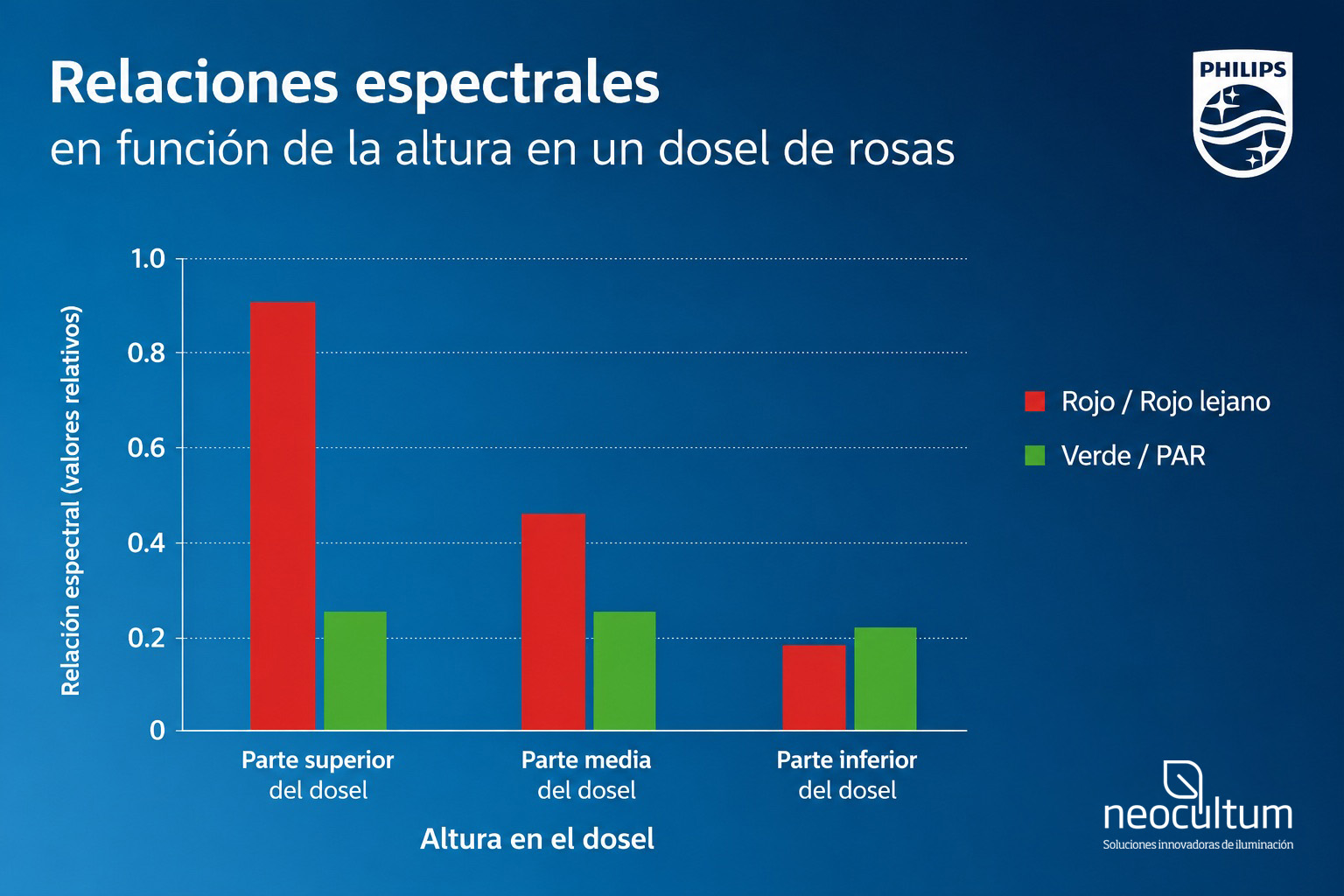
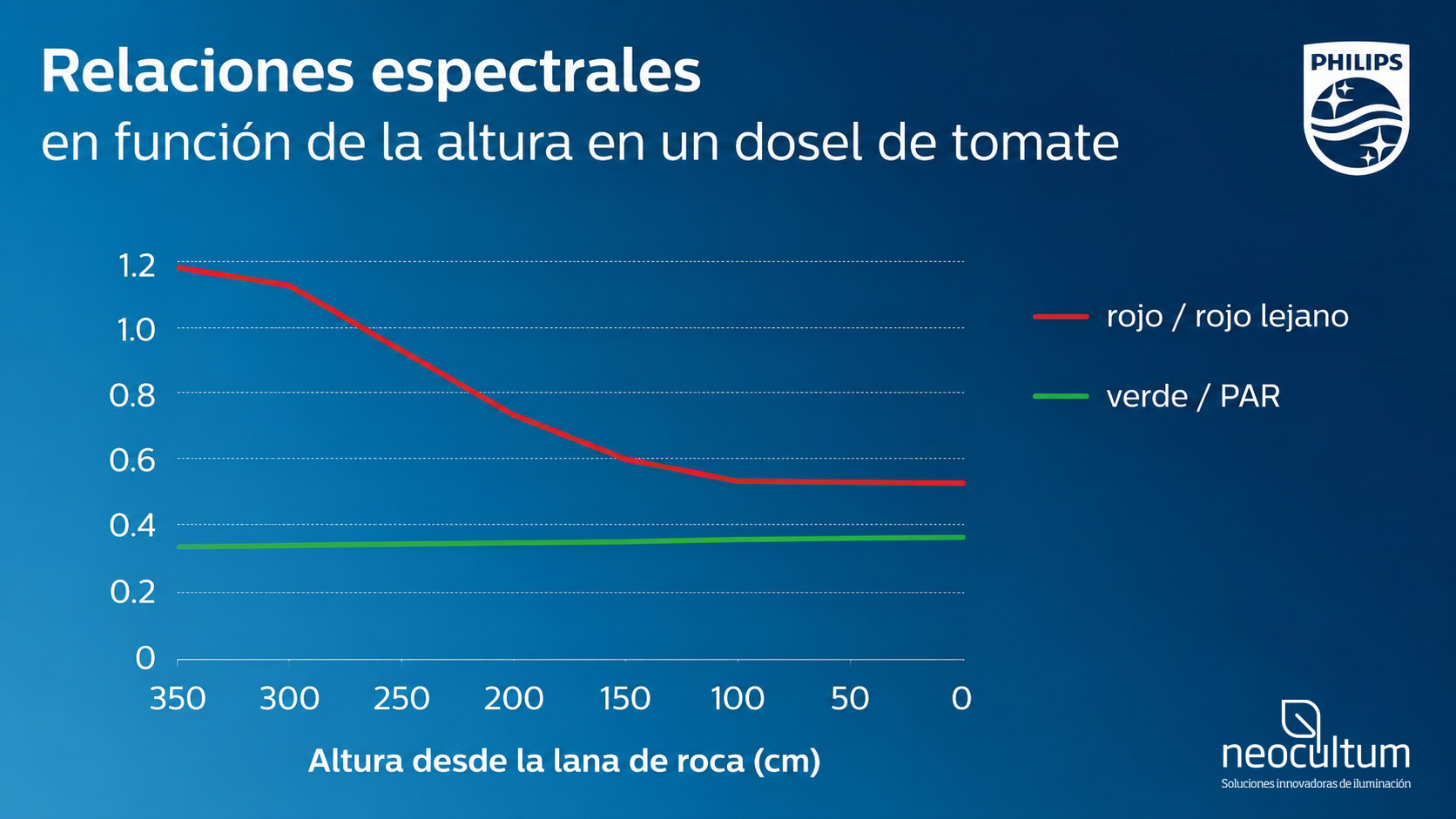
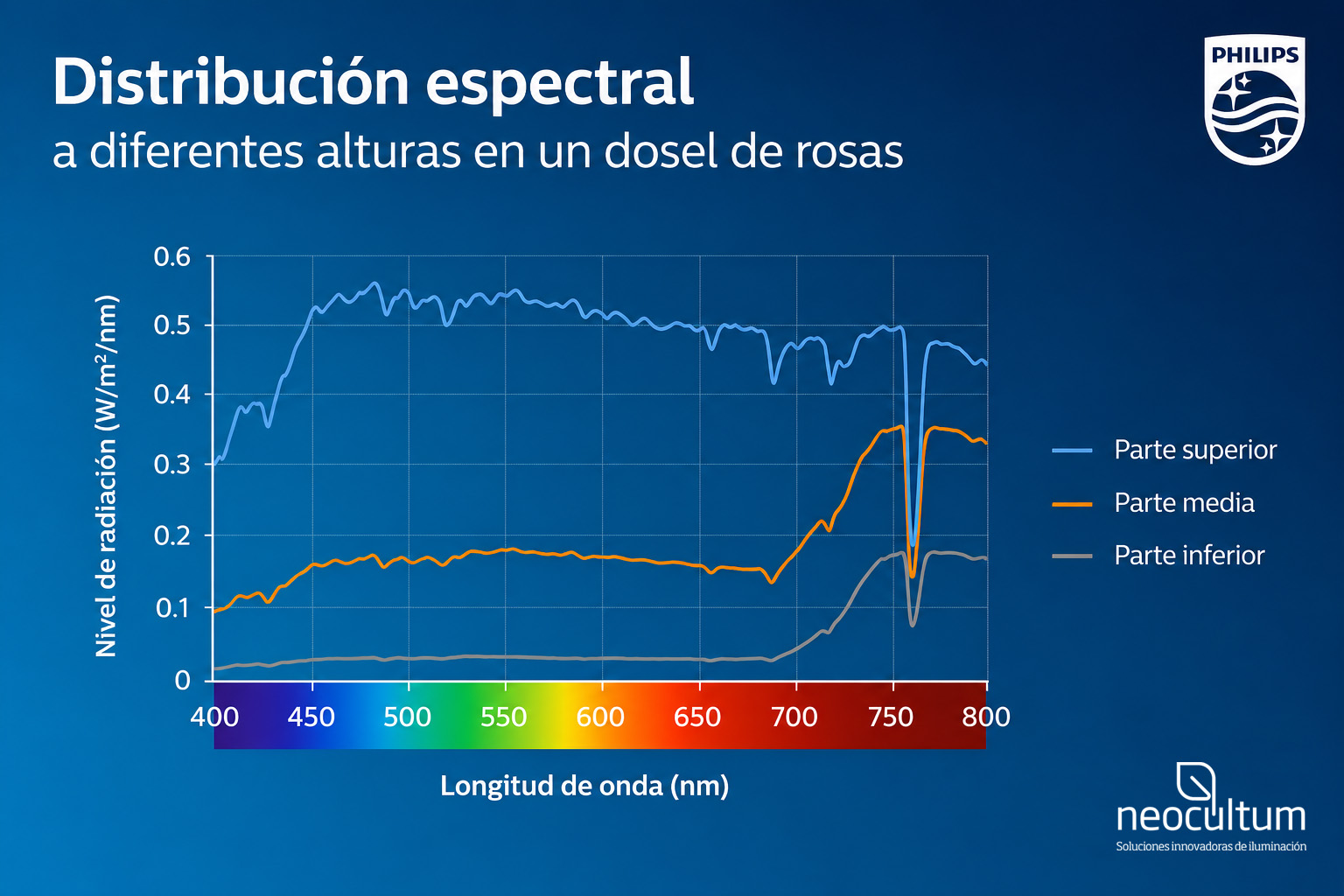
Studies in commercial crops show that, as light passes through the canopy, the intensity of photosynthetically active radiation (PAR) decreases considerably because the plants absorb it.
However, this reduction affects blue, green and red light in very similar ways. In other words, the proportion of green light relative to the rest of the spectrum remains almost constant at different crop heights.
By contrast, there is a significant difference with far-red light, which has a greater ability to pass through the canopy because leaves absorb less of it.